
Subscribe for Tips
If you’ve ever switched between indoor and outdoor volleyball, you might have noticed that the balls don’t feel quite the same. That’s because indoor and outdoor volleyball balls are designed for different playing environments. Understanding these differences can help you choose the right ball for your game — and improve your overall performance.
While both are critical pieces of equipment for their respective games, the difference between indoor and outdoor volleyball balls are a necessary adaptation to the environment and the style of play.
Why Volleyball Balls Differ Between Indoor and Outdoor Play
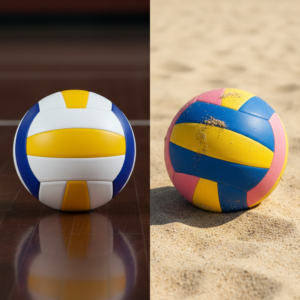
Volleyball is played in two main environments — indoors on hardwood courts and outdoors on sand. Each setting presents unique challenges related to air pressure, temperature, surface, and gameplay style.
Because of that, manufacturers design volleyballs specifically for each environment, ensuring optimal flight, control, and durability.
1. Material and Texture
Indoor Volleyball Balls
Indoor volleyballs are made with a smooth leather or synthetic leather surface. This sleek texture allows for faster gameplay, better control, and consistent bounce on hard floors. The panels are glued together for a seamless feel, which helps with precision passing and setting.
Outdoor Volleyball Balls
Outdoor or beach volleyballs are made from softer, slightly textured composite materials. The rougher texture makes them easier to grip, even when hands are wet or sandy. These balls are also designed to resist moisture and UV damage from prolonged exposure to the sun.
2. Weight and Air Pressure
Indoor Balls
Indoor volleyballs are typically heavier and more pressurized. This allows for faster serves and spikes, which are ideal for the quick-paced style of indoor volleyball.
Outdoor Balls
Outdoor volleyballs are slightly larger, lighter, and less pressurized. The reduced pressure helps them stay stable in windy conditions and allows for softer touches, which are essential for beach play.
3. Panel Design and Construction
Indoor Volleyball
Most indoor balls have 18 panels glued together, creating a streamlined surface. This design helps the ball move quickly and predictably through the air — crucial for indoor precision.
Outdoor Volleyball
Outdoor or beach volleyballs usually have sewn panels, making them more durable and water-resistant. The slightly raised seams also give players a better grip when playing in the sand.
4. Gameplay Differences
The difference between the two volleyball types isn’t just physical — it also affects how the game is played.
-
Indoor volleyball involves six players per team on a hard court, emphasizing power, speed, and coordination.
-
Outdoor (beach) volleyball is typically two players per team, focusing more on endurance, strategy, and adaptability.
Because of these distinctions, the ball’s design directly supports the gameplay — heavier for speed indoors, lighter for control outdoors.
5. Visual Design
Outdoor volleyballs are often brightly colored, making them easier to see under the sun or against blue skies. Indoor balls, on the other hand, are designed with contrasting panel colors to enhance visibility under indoor lighting conditions.
Choosing the Right Volleyball for Your Game

If you mostly play indoors, choose a heavier, smoother indoor volleyball to match the pace of the game. If you’re hitting the sand, opt for a lighter, textured outdoor volleyball that performs well in the elements.
For the best experience, always match your ball to your playing environment — it makes a noticeable difference in control, comfort, and consistency.
Play Beach Volleyball Indoors at The Beach YYC
Want to enjoy the feel of beach volleyball year-round? You can — at The Beach YYC in Calgary!
Our facility features indoor sand courts designed to replicate real beach conditions. Whether you’re training, playing with friends, or hosting an event, you’ll experience authentic beach gameplay without worrying about the weather.
Contact us or visit our website to learn more about court rentals, leagues, and drop-in sessions.
Final Thoughts
While the difference between indoor and outdoor volleyball balls might seem minor, it can have a big impact on performance. Indoor volleyballs are built for speed and control, while outdoor versions prioritize durability and grip.
Understanding these distinctions helps players adapt their technique — and enjoy the game even more. Whether you prefer the indoor court or the sandy feel of the beach, The Beach YYC offers the perfect place to play, learn, and have fun all year long.